;)
Norman Knight

| ||||||||||||||||||||
Conclusion |
|---|
|
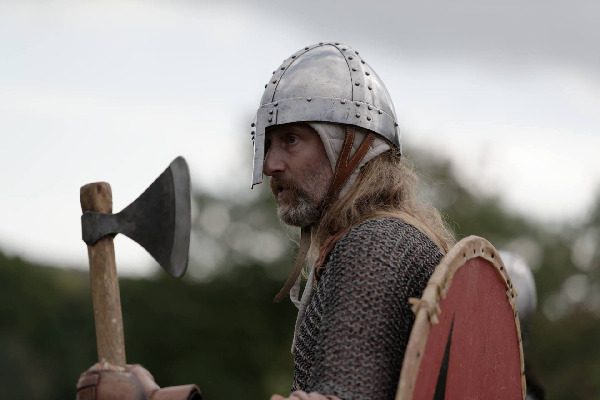
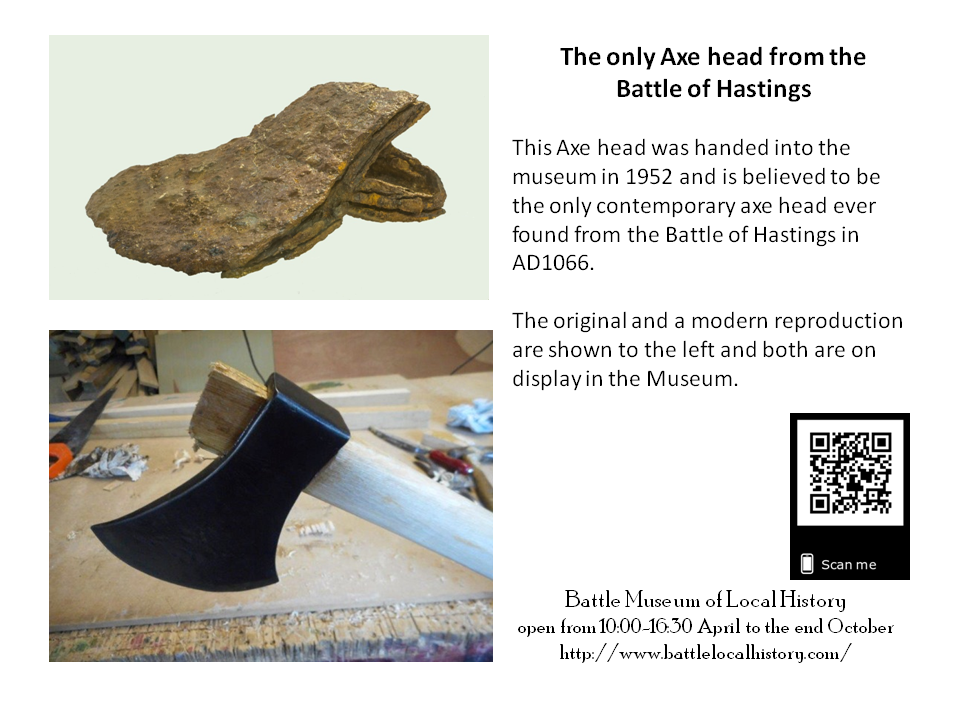
The Huscarls were the backbone of Harold's army but they were a finite resource. Estimates suggest Harold had around one thousand at Hastings, spread along a defensive line of several hundred metres. They provided the fighting expertise and the physical presence to hold the line at critical points, but they could not be everywhere at once. Their vulnerability was the crossbow. Ring mail that could deflect a sword cut or turn an arrow offered little resistance to a crossbow quarrel at close range. As the Page on Bows and Crossbows describes, the Norman strategy of eliminating Saxon archers first was partly designed to allow crossbows to advance within effective range — and at that range the quarrels could punch straight through the armour the Huscarls depended on. Every Huscarl lost to crossbow fire was an irreplaceable loss of the experienced core holding Harold's line together. Their greatest asset was space to swing. The long Dane axe was devastating in open ground but unwieldy in a press of men. The wattle fence and ditch described in the Malfosse page served the Huscarls as much as the Fyrd — it kept the Normans at arm's length, gave the axemen room to work, and prevented the kind of close-order melee where the axe lost its advantage and the Huscarls had to fight with swords against heavily armoured knights. That the line held for seven hours is in large part a measure of what a thousand professional soldiers fighting behind an engineered obstacle could achieve. There is a strong case that the crossbowmen William recruited from Apulia, Calabria and Sicily were brought specifically with the Huscarls in mind. William had access to detailed intelligence about the Saxon army through the Fécamp Abbey network, and would have known that the Huscarls were armoured professionals that conventional cavalry and infantry could not easily kill. The crossbow was the specific tactical answer to that specific problem — a weapon that could penetrate ring mail at close range where nothing else reliably could. The recruitment of specialist crossbowmen before the invasion, their shipment to Normandy and their integration into the force was not improvised. It was planned, and the Huscarls were almost certainly the primary target. The secondary effect — quarrels punching through the armour of the men in front of the Fyrd, visibly killing soldiers the farmers behind them believed to be near-invulnerable — would have been as damaging to Saxon morale as to Saxon bodies. |
Local Interest
Just click an image
Just click an image