| Battle of Hastings 1066AD - C - Ships - Drekka, Snekkja and Knarr |
|---|
| Research Brief: Naval Architecture and Logistical Constraints of the 1066 Norman Invasion Fleet |
|---|
|
Abstract: This section evaluates the dual-component naval architecture of Duke William's invasion fleet, analyzing how distinct vessel variants dictated the speed, capacity, and tactical deployment of the 1066 cross-Channel crossing. The Norman fleet relied on the convergence of two distinct Scandinavian traditions: the Snekkja (and its larger Drakkar variant), a low-draft, oar-and-sail warship engineered for rapid troop transport and direct beach landings; and the Knarr, a beamier, deep-hulled, sail-dependent merchant vessel capable of carrying heavy cargo and horses. By cross-referencing structural dimensions against the equine capacities and crossing timelines recorded in the Carmen de Haestingae Proelio, this study establishes the mechanical limits of the fleet. The inclusion of the slow, sail-reliant Knarr effectively capped the fleet's average transit speed to 5–10 knots, while specific physical parameters—such as eleventh-century anchor chain limitations—strictly dictated the mid-Channel anchorage coordinates and eventual landing profiles on the Sussex shore.
|
Introduction
▲ |
|---|
When William Duke of Normandy crossed the Channel in September 1066, he was not commanding a purpose-built invasion fleet. He was commanding a collection of fishing boats, merchant vessels and coastal warships, crewed by men whose seafaring tradition stretched back two centuries to the first Norse settlers of Normandy.
Understanding what those ships were actually capable of is not a footnote to the story of the Battle of Hastings — it is central to it. The type of vessel determines how fast the fleet could sail, how many horses each ship could carry, how shallow an anchorage it could use, and how close to shore it could land without harbour infrastructure. Every major decision William made on the crossing — the route, the overnight stop, the landing point — was shaped directly by the physical limitations of his ships.
This page examines the two principal vessel types in William's fleet: the Snekkja, a long narrow warship capable of beaching under oar power, and the Knarr, a wider cargo ship that made the horse transport possible but constrained the fleet's overall speed. It works through the capacity of each type for men and horses, uses the Carmen's crossing timings to establish the fleet's average speed, and examines one physical constraint that has been largely overlooked — the length of a Viking anchor chain, and what that meant for where the fleet could safely spend the night mid-Channel.
The ships are not background detail. They are the evidence.
|
| |
|---|
The Norman Vikings ▲ |
|---|

Normandy was first raided by Vikings in 790AD and settled by them around 840AD, so when William assembled his invasion fleet in 1066 he was drawing on two centuries of Norse shipbuilding tradition. The ships he used were not designed for invasion — they were fishing vessels, merchant ships and coastal warships pressed into a specific task: transporting several thousand men, several hundred horses, and the supplies to sustain an army, across approximately 146km of open water, partly in darkness, in late September.
Understanding what these ships were capable of is not merely background detail. The type of vessel determines how fast the fleet could sail, how many horses each ship could carry, how deep an anchorage it required, and how close to shore it could beach. All of these constraints directly shaped the route William took and the decisions he made on the crossing. Pages Dives to St Valerie and St Valerie to Pevensey examine that crossing in detail — this page provides the ship characteristics that explain why the fleet behaved as it did.
|
The two types of ship ▲ |
|---|
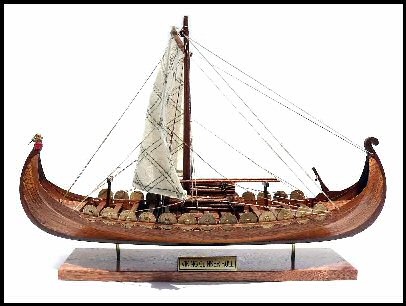 William's fleet combined two fundamentally different vessel types, and the crossing required both.
The warship was the Snekkja (meaning snake), a long, narrow, shallow-drafted vessel propelled by both oars and sail. A larger variant called the Drekka (meaning dragon) served as a commander's vessel and was typically distinguished by a carved dragon prow. The Snekkja carried fighting men and could be rowed when the wind failed or when manoeuvring in shallow water near shore. Its shallow draught — approximately 0.5 metres — allowed it to beach directly on a shoreline without a harbour, which was essential for an opposed or undefended landing on an unfamiliar coast.
William's fleet combined two fundamentally different vessel types, and the crossing required both.
The warship was the Snekkja (meaning snake), a long, narrow, shallow-drafted vessel propelled by both oars and sail. A larger variant called the Drekka (meaning dragon) served as a commander's vessel and was typically distinguished by a carved dragon prow. The Snekkja carried fighting men and could be rowed when the wind failed or when manoeuvring in shallow water near shore. Its shallow draught — approximately 0.5 metres — allowed it to beach directly on a shoreline without a harbour, which was essential for an opposed or undefended landing on an unfamiliar coast.
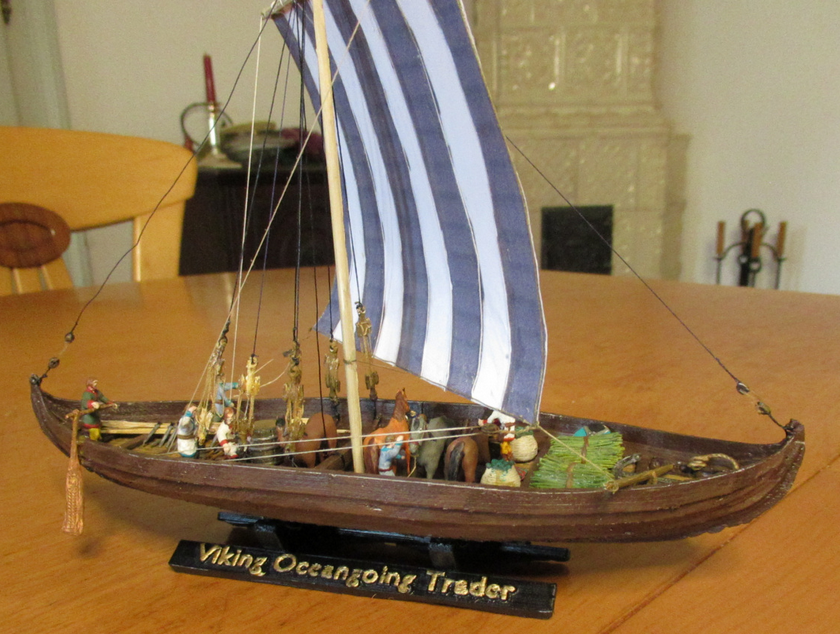
The cargo ship was the Knarr (meaning merchant vessel), wider, deeper, and slower than the Snekkja. Its smaller relative, the Karve, carried lighter loads over shorter distances. Unlike the Snekkja, the Knarr was primarily sail-dependent, requiring only a small crew of around six. It was the Knarr that made the horse transport possible — its wider beam and greater load capacity could accommodate animals that a Snekkja could not.
The fleet's overall speed on the crossing was therefore constrained by its slowest element. A Snekkja in good conditions could reach 13 knots; a Knarr averaged 5 to 10 knots under sail. The Carmen's account of the crossing implies an average of around 7 knots sustained over the full journey — consistent with a mixed fleet paced by its cargo ships.
|
Horse capacity ▲ |
|---|
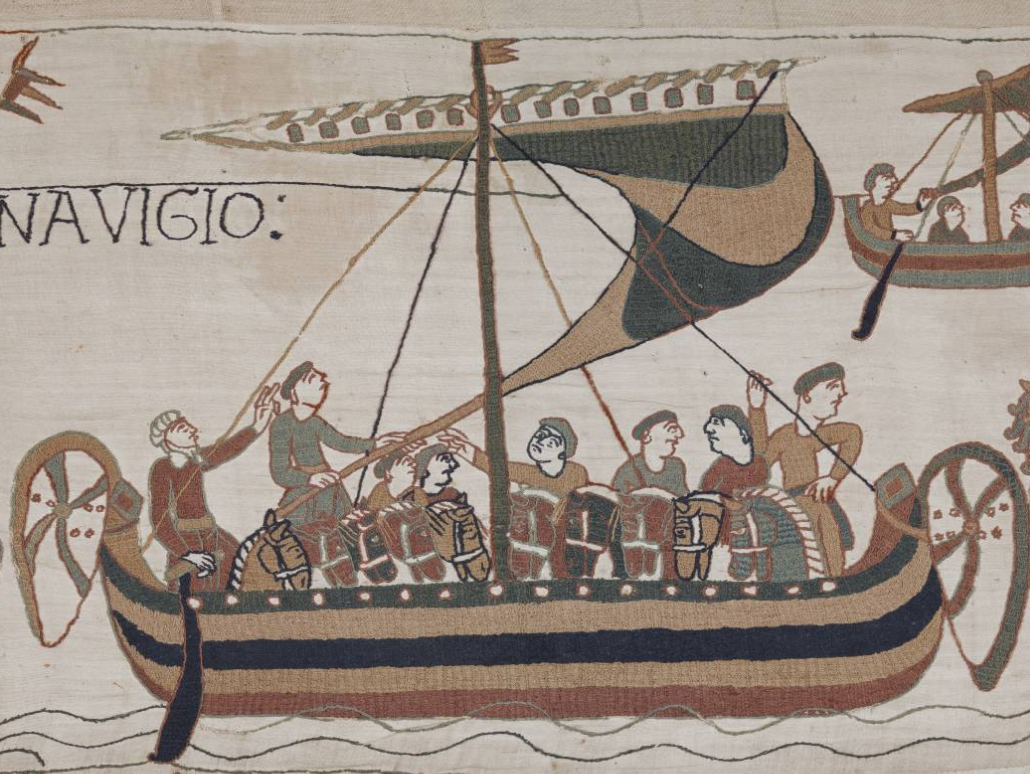 The Bayeux Tapestry shows horses being transported in both vessel types, and the two impose different constraints.
A standard Snekkja had a usable carrying space of approximately 40ft x 6ft. Allowing 8ft x 3ft per horse — the approximate floor area of a standing horse — two horses could stand side by side with five rows, giving a maximum of ten horses per Snekkja, together with the ten squires needed to manage them during the crossing.
A Knarr was wider, with a usable carrying space of approximately 40ft x 10ft, accommodating twelve horses in three rows of four. A Knarr could theoretically carry far more by weight alone — its 30-ton capacity would allow sixty horses at approximately 500kg each — but space, not weight, was always the binding constraint. It is worth noting that the Knarr was not a standardised vessel: individual ships varied considerably in size, and twelve should be treated as a reasonable working figure for a mid-sized example rather than a fixed specification.
|
Ship speeds and the Carmen timings ▲ |
|---|
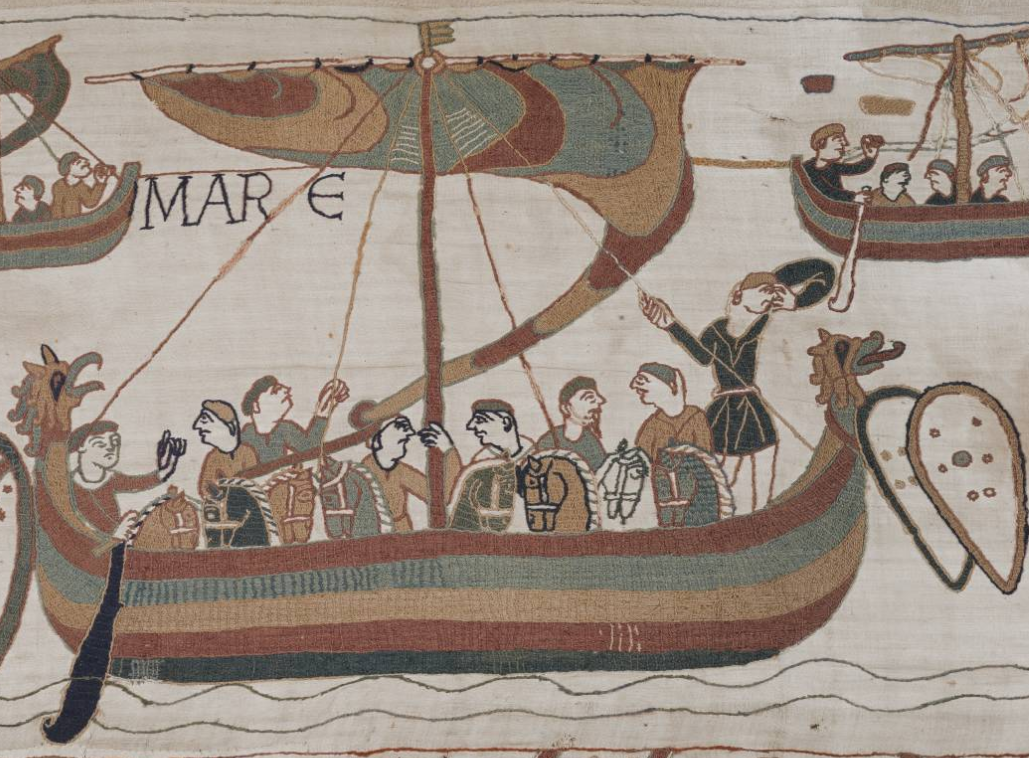 The Carmen de Triumpho Normannico gives the only detailed account of the crossing, and its timings imply a specific average speed. The fleet left St Valérie after midday — approximately 12:00 — sailed until dark, anchored overnight on an open-water shoal, weighed anchor before dawn, and reached the English shore approximately three hours after sunrise, putting the landing at around 09:00 to 10:00. Total sailing time was approximately thirteen hours covering approximately 146km, giving an average speed of around 7 knots.
This is consistent with a mixed fleet of Snekkja and Knarr under reasonable sailing conditions with a southerly wind — the wind William had been waiting for throughout the weeks of delay at St Valérie.
|
Anchor chain length and its consequences ▲ |
|---|
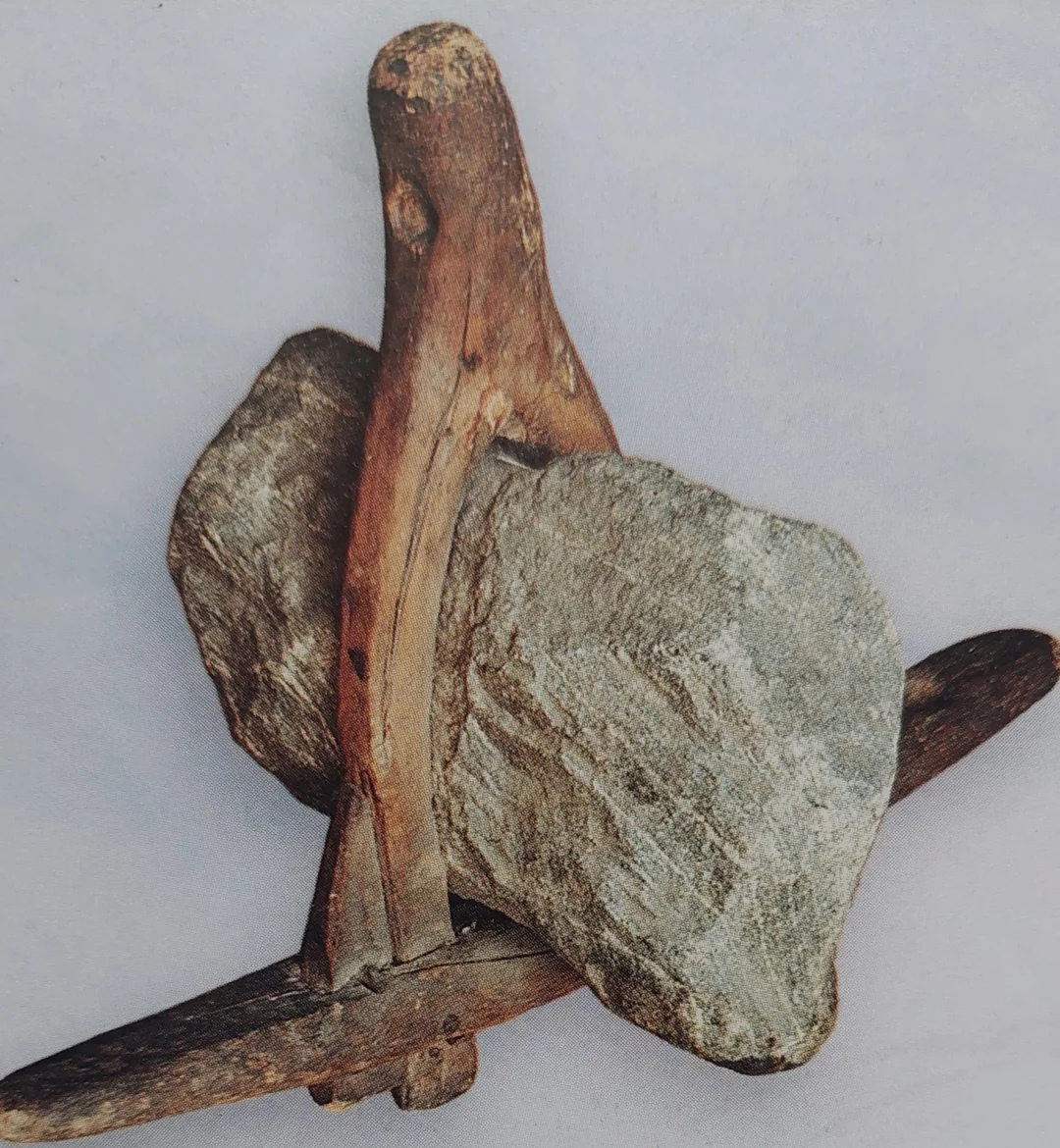 Viking anchor chains were short by modern standards. The only surviving example with its chain intact — found at Ladby in Denmark — had an iron anchor chain approximately 11 metres long. This meant a Viking vessel could anchor safely only where the water depth was approximately 6 metres or less.
Most of the English Channel is far deeper than this. At high tide in 1066 — which was likely 4 to 5 metres higher than today — only a handful of Channel shoals and sandbanks offered depths shallow enough for the fleet to anchor. This single physical constraint is what determines where the fleet spent the night on the crossing. The implications are examined on Page E, where the surviving shoals are mapped against the Carmen's timings. The conclusion is that the Colbart Ridge, approximately mid-Channel between St Valérie and the English coast, is the only anchorage that satisfies all the constraints simultaneously.
|
Conclusion ▲ |
|---|
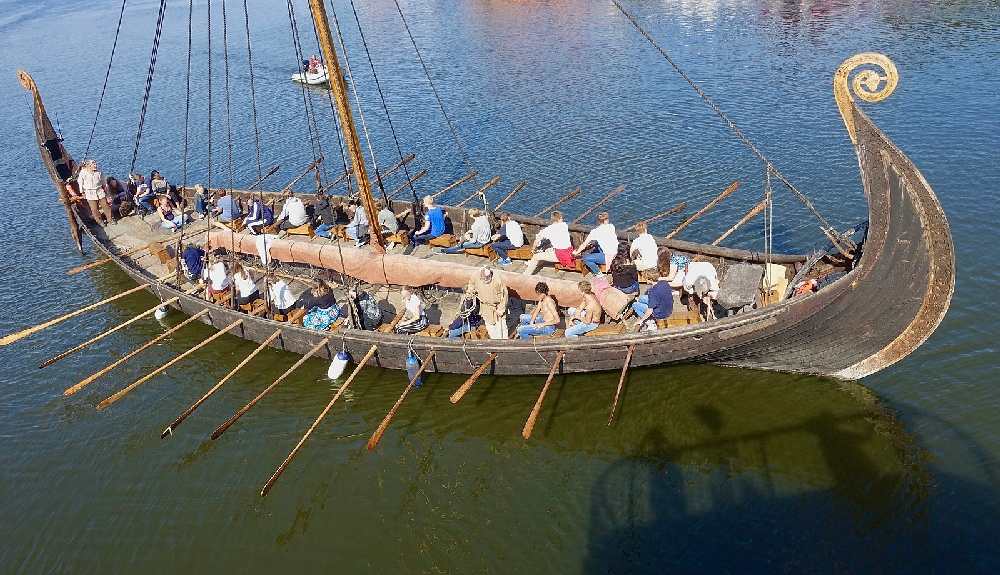
This image of a Viking longboat is from https://www.thildekoldholdt.com/post/viking-age-ships, and shows that they were able to carry large numbers of people possibly 50 or 60 if just used for transport.
William's fleet was not purpose-built for invasion — it was assembled from the working vessels of Normandy and its allies. But the combination of Snekkja and Knarr suited the specific demands of the crossing well: the Snekkja could carry fighting men quickly and beach under oar power; the Knarr could carry horses and supplies under sail. Together they imposed a fleet speed of around 7 knots, an anchoring constraint of 6 metres depth, and a landing capability that required no harbour infrastructure.
These characteristics are not background colour. They are the reason the fleet took the route it did, anchored where it did, and landed where it did. The ship list on Page A tells us how many vessels there were; pages D and E explain what those vessels could and could not do on a night crossing of the Channel in late September 1066.
|
|
;)