Saxon Thegn
Saxon Thegn
Logo
Shield

Ptolemy Geographia - Understanding the Geographia


What is the Geographia?

Written by Claudius Ptolemy in Alexandria around 150 AD, the Geographia is one of the most remarkable documents to survive from the Roman world — a comprehensive atlas listing the latitude and longitude of towns, rivers, tribes and promontories across the known Roman empire, from Ireland in the west to Asia in the east.

Ptolemy did not invent his data from scratch. His work built on an earlier, now-lost atlas by Marinus of Tyre, supplemented by Roman and Persian military gazetteers. The result was a gazetteer of extraordinary scope, though one riddled with distortions that have puzzled historians ever since.

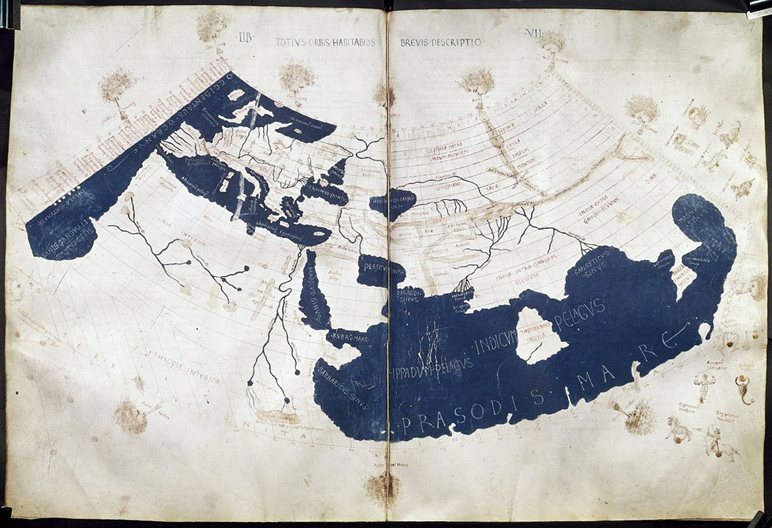
No original maps have survived. The maps we associate with the Geographia today were reconstructed from Ptolemy's coordinates by Byzantine monks under the direction of Maximus Planudes around 1295 AD — more than a thousand years after the text was written.


1295AD Map of the Geographia

Ptolemy world map, reconstructed c.1295 AD
 

The problem with Ptolemy

When scholars plot Ptolemy's coordinates for Britain and Ireland directly onto a modern map, the results are visibly wrong. Ireland appears slightly offset. Southern England shows a larger distortion. Scotland appears rotated by roughly 90 degrees.

The conventional assumption has been that Ptolemy simply made mistakes — that his data was imprecise, his sources unreliable. Previous analyses by Bill Thayer (LacusCurtius) and by Darcy and Flynn (2008) both concluded that direct plotting of the coordinates was not particularly productive.

This site takes a different approach.

Simon's hypothesis: The latitude and longitude values in the Geographia are not true absolute coordinates. Instead, they are calculated relative to a small number of fixed, known reference points — most likely including Roman Gades (modern Cadiz) in southern Spain, Wexford in Ireland, and Colchester and Burgh Castle in Britain. Once this is understood, the distortions can be explained and the locations of unidentified settlements mapped with reasonable confidence.

This approach has allowed a number of Ptolemy's unidentified locations — including inland towns, river mouths and tribal territories — to be plotted onto modern maps for the first time.


Why this matters

Ptolemy's Geographia was almost certainly produced for Roman military and administrative purposes. A document that correctly identifies the location of every significant tribe, town and river crossing in Britain and Ireland would have been invaluable for planning invasions, organising supply routes and understanding the political landscape of territories yet to be fully subjugated.

Correctly decoding the coordinates also raises intriguing questions about Roman knowledge and reach. The analysis suggests that somewhere near Wexford was a significant Roman mapping reference point — implying a level of Roman familiarity with Ireland that goes beyond what the historical record formally acknowledges. The connection to Cadiz in turn suggests that the Romans were calculating distances and positions across their entire Atlantic coastline from a single well-known southern reference point.


Research in this section

Ireland

Hibernia

Ireland's relatively simple coastline makes it the ideal starting point for the analysis.

Read the Hibernia analysis
England & Wales

Albion

Applying the same methodology to southern Britain and the mapping of Britannia.

Read the Albion analysis
Scotland

Caledonia

Scotland presents the greatest challenge — Ptolemy's data appears rotated by roughly 90 degrees.

Read the Caledonia analysis


Local Interest
Just click an image
Battle and District Historical Society
World War 2 Vehicle database
Battle Museum of Local History
(Hard to find but worth the Visit)
Fairlight History Group
Bexhill Museum
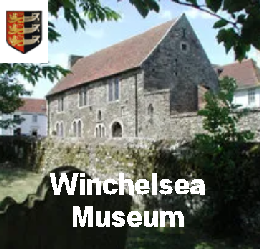
Winchelsea Museum
Hastings Rock the place to listen to
The Rudes as lots of people call us, are an outdoor touring theatre company specialising in taking new & original theatre to mainly small rural communities and a few towns across the South of England. We were founded in 1998 & first toured in the Summer of 1999. Currently we tour only in the summer performing 50+ times nightly during June, July & August. https://therudemechanicaltheatre.co.uk
Learn to Drive with Jo
Hastings Museum and Art Gallery
Wadhurst History Society
Wealden Iron Research Group