| Battle of Hastings 1066AD - A - Where to find the Chronicles referenced |
|---|
| Research Brief: Historiographical Source Compendium for the 1066 Norman Conquest |
|---|
|
Abstract: This index serves as a centralized bibliographic repository aggregating primary, secondary, and ancillary digital source assets concerning the Norman Conquest of England and the 1066 campaign. This compilation categorizes and cross-references key Anglo-Saxon and Anglo-Norman textual traditions, including the Anglo-Saxon Chronicle codices, early Norman vernacular epics, monastic annals, contemporary verse, cartographic Lidar overlays, and lexical databases. By provisioning direct access to validated translations and digital manuscript facsimiles (Project Gutenberg, Internet Archive, Charles University Faculty of Arts), this directory establishes a transparent data foundation for localized multi-disciplinary historical synthesis and landscape analysis within the Hastings region.
|
On this page I will try to provide links to sites that have copies of the Chronicles, or links to books that can be found on Amazon. These documents are in no particular order, just as I write them down.
| Introduction ▲ |
|---|
The research on this site draws on a small number of primary sources that are surprisingly accessible — most are available free online in translation, and several can be read in their original language too. This page collects direct links to all of them in one place, along with a brief note on what each source is, who wrote it, and where to find the best available version.
The sources range from the Anglo Saxon Chronicles — multiple manuscript versions, some translated and some in the original Old English — through to the Bayeux Tapestry online viewer, Master Wace's Roman de Rou, the Chronicle of Battle Abbey, the Carmen of Guy d'Amiens, and the invaluable Bosworth Toller Anglo Saxon Dictionary that underpins much of the place-name analysis elsewhere on the site. The Open Domesday Book and the National Library of Scotland map archive are also here, both of which are extraordinary free resources for anyone researching the period.
| | |
|---|
The Anglo Saxon Chronicles ▲ |
|---|
From Wikipedia:
The Anglo-Saxon Chronicle is a collection of annals in Old English, chronicling the history of the Anglo-Saxons.
The original manuscript of the Chronicle was created late in the ninth century, probably in Wessex, during the reign of King Alfred the Great (r. 871–899). Its content, which incorporated sources now otherwise lost dating from as early as the seventh century, is known as the "Common Stock" of the Chronicle. Multiple copies were made of that one original and then distributed to monasteries across England, where they were updated, partly independently. These manuscripts collectively are known as the Anglo-Saxon Chronicle.
You can find the Ingrams translation of the 'Anglo-Saxon Chronicle' by clicking the following link from project Gutenberg(text) or the Giles translation
Public Library(pdf) or a number of untranslated versions of the original text Wikisource.
| The Bayeux Tapestry ▲ |
|---|
From Wikipedia:
The Bayeux Tapestry is an embroidered cloth nearly 70 metres (230 feet) long and 50 centimetres (20 inches) tall that depicts the events leading up to the Norman Conquest of England in 1066, led by William, Duke of Normandy, challenging Harold II, King of England, and culminating in the Battle of Hastings. It is thought to date to the 11th century, within a few years of the battle. Now widely accepted to have been made in England, perhaps as a gift for William, it tells the story from the point of view of the conquering Normans and for centuries has been preserved in Normandy.
A full online view of the Tapestry can be found by clicking on the following link to The Bayeux Tapestry Museum website.
or click the image below to go to the Reading Museum website.
if the image doesn't show please click between the lines to open the Reading Museum website.
| Master Wace - The Roman de Rou ▲ |
|---|
From Wikipedia:
Master Wace from (c. 1110 – after 1174), sometimes referred to as Robert Wace, was a Medieval Norman poet (probably a monk), who was born in Jersey and brought up in mainland Normandy.
The Roman de Rou(The Romance of Rollo), was, according to Wace, commissioned by Henry II of England in around 1160. The Rou is a vernacular adaptation of the chronicle tradition of the dukes of Normandy begun by Dudo of St. Quentin, and continued by William of Jumièges, Orderic Vitalis, and Robert of Torigni. Wace claims that he was fired by Henry II after working on the project for 15 years.
You can find the Edgar Taylor translation of the 'Roman de Rou' by clicking the following link The Roman de Rou
| The Chronicle of Florence of Worcester ▲ |
|---|
From Wikipedia:
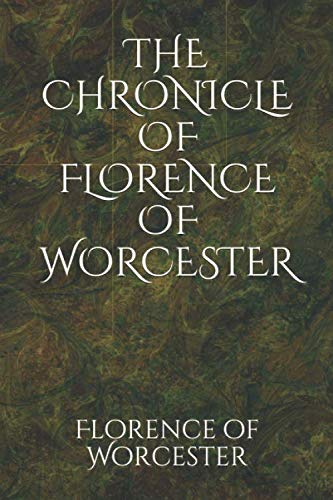
Florence of Worcester (Latin: Florentius Wigorniensis; died 1118) was a monk of Worcester, who played some part in the production of the Chronicon ex chronicis, a Latin world chronicle which begins with the creation and ends in 1140.
The Chronicle of Florence of Worcester, so far as it relates to English history, with its two Continuations, embraces the period from the departure of the Romans in the year 446, to the twenty-third year of tlie reign of Edward I. in 1295.
You can find the text of the Thomas Foster translation of the 'The Chronicle of Florence of Worcester' by clicking the following link the Chronicle of Florence of Worcester or a page by page version on the Internet Archive.
| The Chronicle of Battle Abbey ▲ |
|---|
The Chronicles of Battle Abbey were written to explain the history of the Abbey at Battle in East Sussex and describe its founding and history from 1066 to 1176.
You can find the text of the Mark Anthony Lower translation of the 'The Chronicle of Battle Abbey' by clicking the following link on the Internet Archive.
| Bosworth Toller Anglo Saxon Dctionary ▲ |
|---|
The Anglo Saxon Dictionary
is the best online resource when identifying Saxon place name snippets, or translating the original text from the Anglo Saxon Chronicles. This dictionary was originally written by the Reverend Joseph Bosworth and edited by T Northcote Toller, and was put online in about 2013 by Sean Crist and is hosted by the Faculty of Arts, Charles University in Prague.
The website is a fantastic work where the whole of the document has been put into a searchable database.
You can find a text(pdf) copy of 'The Anglo Saxon Dictionary' by clicking the following link on BosworthToller.com in book format.
This has also been transferred to a Database which can be searched online by clicking the following Link Bosworth Toller online.
| The Open Domesday Book ▲ |
|---|
The Domesday Book
The Domesday Book was a detailed survey of land holdings and resources in England in AD 1086. It is one of the most important historical records ever made. It was commissioned by William I of England in winter 1085.
This online version was built by Anna Powell-Smith with the Domesday data created by Professor J.J.N. Palmer and team.
The website is another fantastic work where a large proportion of the whole document has been put into a searchable database.
Learn more at the Hull Domesday Project.
This has also been transferred to a Database which can be searched online by clicking the following Link the Open Domesday Project.
| The Carmen of Guy d'Amiens ▲ |
|---|
The Carmen of Guy d'Amiens
The Carmen of Guy d'Amiens also called the Carmen de Triumpho Normannico(Song of the Triumphant Normans) or Carmen de Haestingae Proelio(Song of Hastings) which are 19th/20th century names for the Carmen Widonis which was probably written by Guy d'Amiens prior to May AD1068
A readable version of the Carmen translated by Catherine Morton and Hope Muntz can be found online by clicking the following Link the Internet Archive.
Another translation by Kathleen Tyson is available in book form only.
| National Library of Scotland Maps ▲ |
|---|
The National Library of Scotland
This website is another fantastic tool where a large number of old maps can be searched, and be overlayed with lidar maps/satellite images etc.
This site also allows you to plot lines or areas onto the map and export in kml format for import into Google My Maps.
Please click the following link to be shown a map of the Hastings area centered on battle showing the 'OS six inch 1888 - 1915 ' map overlayed with a 1 metre Lidar overlay, the slider at the bottom left controls the percentage of each overlay National Library of Scotland. you can zoom in and out of the map by rolling the mouse wheel.
|
| Recommended Books ▲ |
|---|
| Recommended Books |
|---|
|
|
| | | |
Bede
The Venerable Bede |  |
| | |
| | |
|
|
|
;)